
Blog / Meta Ads / High-converting Meta ads template
Meta Ads · Framework
The High-Converting Meta Ads Template: Why Structure Beats “Creativity” Every Time
Most marketers treat meta ads as an art project, but the pros treat them as architecture. Discover the exact 5-part framework Mashfiquar uses to eliminate guesswork & scale conversions.

· 7 min read
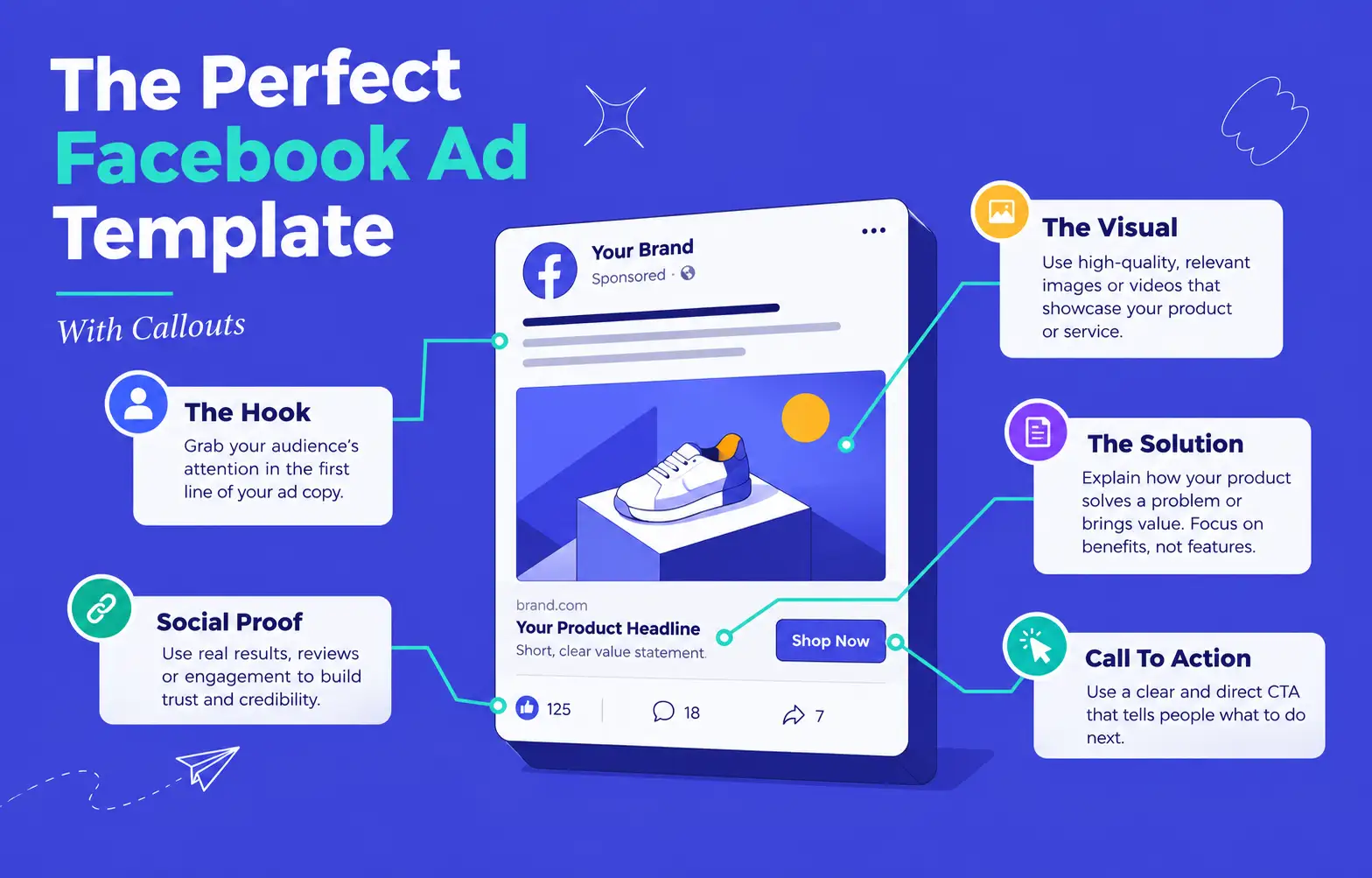
In my half a decade of scaling brand content across WordPress, Ecommerce, and HR tech, I’ve seen a recurring mistake: business owners treat Facebook / Meta ads as an “art project.” They spend hours agonizing over a clever pun or a fancy color palette, hoping it “clicks” with the audience.
The core idea
But what they do not realize until its too late that: Conversion is not about creativity; it is about structure.
High-converting ads aren’t accidents. They are the result of a rigorous framework created through trial & errors that guides a stranger from a state of distraction to a state of action.
If your ads are underperforming, it’s likely not your product – it’s your content structure.
Below is the breakdown of the High-Converting Meta ads templateand the critical thinking behind why it works.
The High-Converting Meta Ads Template Breakdown
- The Hook– Grab attention with the first line. Skip the fluff & lead with a clear pain point or desire.
- The Solution – Show how your product solves the problem & delivers what the audience wants.
- The Visual – Use compelling static creatives or video designed to stop the scroll and reinforce the message.
- Social Proof – Let others review, provide feedback, reactions, or real customer experiences.
- Call to Action – Give people a clear next step & make it easy to act on it.
Why This Works: The Psychology of Conversion
This template isn’t just a list—it’s an implementation of the AIDA Framework (Attention, Interest, Desire, Action).
- Attention: Captured by the Hook and Visual.
- Interest: Built by the Solution.
- Desire: Amplified by Social Proof.
- Action: Triggered by the CTA.
Reducing “Decision Friction”
The goal of a professional ad copy creative combination is to reduce cognitive load. When an ad is structured logically, the brain doesn’t have to work to understand the value proposition.
By removing friction, you lower the barrier to the click.
Ad Copy Structural Examples (Industry Archetypes)
To show you how this applies in the real world, let’s look at three different strategic approaches.
Example A: The “Disruptive Logic” Approach
(Common in Direct-to-Consumer / Grooming)
- The Hook: A humorous take on how overpriced and outdated the current industry standard is.
- The Solution: A simple, subscription-based alternative that delivers quality to the door.
- The Result: It works because it positions the brand as the “smart choice” against a “greedy industry.”
Real-world reference: Dollar Shave Club
Its famous 2012 launch video used humor to attack the logic of expensive, over-engineered razors, then immediately presented a simpler subscription model delivered to your door.
The campaign explicitly contrasted itself with expensive “fancy brand name” shaving technology.
Example B: The “Transformation” Approach
(Common in High-Ticket Fitness/Health Tech)
- The Hook: Showing the “Before” vs. “After” of a real user’s lifestyle.
- The Solution: An ecosystem that makes the habit effortless.
- The Result: It works by selling the identity of the user, not just the hardware of the product.
Real-world reference: Peloton
Peloton has built a substantial library of member stories centered on how people incorporate the product into their lives and how their routines, fitness and goals change—not simply on the specifications of the bike or treadmill. Its own member-story library includes examples such as a busy parent’s weekly routine, marathon preparation, and members describing how 100 rides changed their lives.
Example C: The “Authenticity” Approach
(Common in Beauty/Skincare)
- The Hook: A raw, unedited photo of a customer using the product.
- The Solution: Minimalist ingredients that provide visible results.
- The Result: It works by leveraging “social mirroring”—the user sees someone like them and trusts the result.
Real-world reference: Glossier
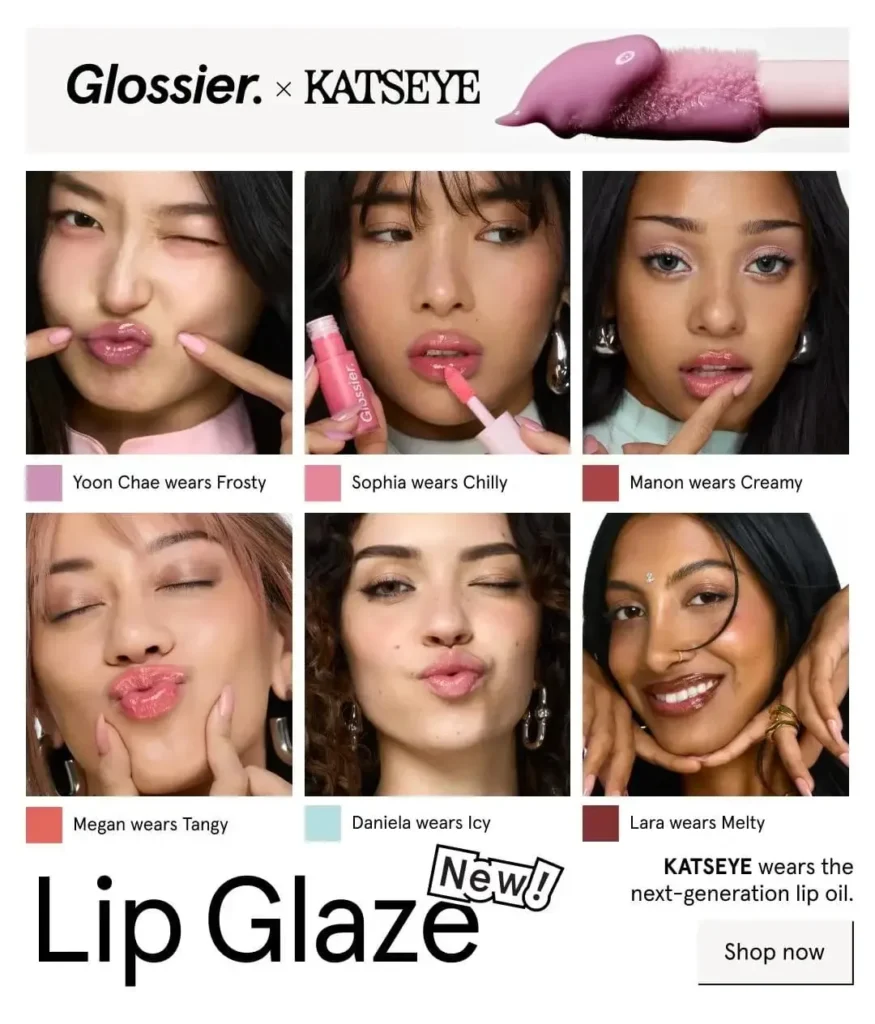
This is probably the cleanest real-world example of an archetype. Glossier built its early marketing around customers, social media, community interaction, and real people rather than conventional polished beauty advertising. Harvard Business School’s case study specifically describes customers posting their own pictures and the brand using those interactions as authentic testimonials. And at specific campaign they successfully use the same formula with influencers.
Copywriting in the Age of Generative AI: Scaling the Framework
Now that we have the structure, let’s talk about execution.
As a copywriter / marketer who is evolving with the industry, I’ve seen the panic that Generative AI (ChatGPT, Claude, Gemini) has caused among copywriters.
Here is my take: AI cannot strategize, but it can accelerate. It is not your replacement, it is a tool for you to use.
The biggest mistake I see marketers make is asking AI to “Write a meta ads copy for my product.” The result is always the same: generic, fluffy, & “ad-sounding” copy that people instinctively ignore.
To get high-converting copy from Generative AI, you must prompt the framework, not just the product. You don’t ask the AI to be a copywriter; you ask it to be a specialist applying a specific structural for the task at hand.
From “Prompting” to “Architecting”
When using AI, I utilize Framework-First Prompting. Instead of letting the AI guess the structure, I force it to follow the 5-part framework we discussed above.
Example 1: The “Hook” Generator
If I’m struggling with a hook, I don’t ask for “catchy lines.” I ask for “psychological triggers.”
The Prompt:
"I am selling a [SaaS tool for HR automate payroll]. My target audience is [overwhelmed HR managers in mid-sized companies]. Using the concept of 'The Open Loop' and 'Pain-Point Lead,' give me 5 distinct meta Ads hooks. Avoid generic words like 'Revolutionize,' 'Unlock,' or 'Ultimate.' Focus on the visceral frustration of manual data entry and payroll errors."The AI Output (Example):
- “Still spending your entire Sunday double-checking payroll spreadsheets?”
- “That one manual entry error just cost you 4 hours of sleep and a very angry employee.”
- “Payroll shouldn’t feel like a game of Minesweeper where one wrong click ruins the month.”
Example 2: The Full-Structure Draft (The Blueprint Implementation)
When I need a full draft, I provide the AI with the exact roles each section must play.
The Prompt:
*"Write a Facebook Ad for [Eco-friendly Home Cleaning Kit]. Follow this exact structure:
The Hook: Lead with the desire for a clean home without toxic chemicals.
The Solution: Position our kit as the bridge between 'industrial strength' and 'non-toxic.'
Social Proof: Integrate a placeholder for a 5-star customer quote.
CTA: A low-friction directive to 'Claim the Starter Kit.' Tone: Professional, empathetic, and direct. No fluff."*
The AI Output (Example):
[Hook] You shouldn’t have to choose between a sparkling clean kitchen and a home that’s safe for your toddlers and pets.
[Solution] Most ‘green’ cleaners don’t actually clean, and most ‘strong’ cleaners are toxic. We built the [Product Name] to give you the potency of industrial cleaners with 100% plant-based ingredients.
[Social Proof] “Finally, a natural cleaner that actually removes grease without the chemical smell!” – Sarah K., Verified Buyer.
[CTA] Ready to detox your home? Click below to claim your Starter Kit. $\rightarrow$ [Link]
Final Takeaway
If you want to scale your ads, stop guessing. Build a hypothesis, apply this structure, and then test one variable at a time. Change the hook, keep the solution. Change the visual, keep the hook.
The winner isn’t the one with the biggest budget; it’s the one with the best system.
Written by
Mashfiquar Rahman
GTM and growth consultant for SaaS teams, remote from Dhaka. I write one post a month from client work, usually with the numbers.
Want this framework on your ads?
Send me your three best-performing ads and the one you expected to win. I’ll tell you which part of the structure to fix first.