
Blog / Case Study / Community safety as brand positioning
Case Study · Brand Positioning
Community Safety as Brand Positioning: How Betting Platforms Build Trust
Betting platforms compete on odds and features. Shuffle.com showed another lever: public standards on who it works with. Here’s why community safety works as brand positioning, and what it takes to stay credible.

· 3 min read
Share
The opportunity
Gaming and betting platforms live in a trust deficit. Regulations are tight. User concerns about addiction, fairness, and responsible gambling are legitimate. Yet most platforms compete on features and odds—the race to the bottom.
One approach flips this: make community safety the differentiator in your brand positioning.
The strategy: distance from toxic influencers
Platforms have a choice when problematic streamers want partnerships: accept the reach and audience overlap, or decline the partnership and signal where you stand.
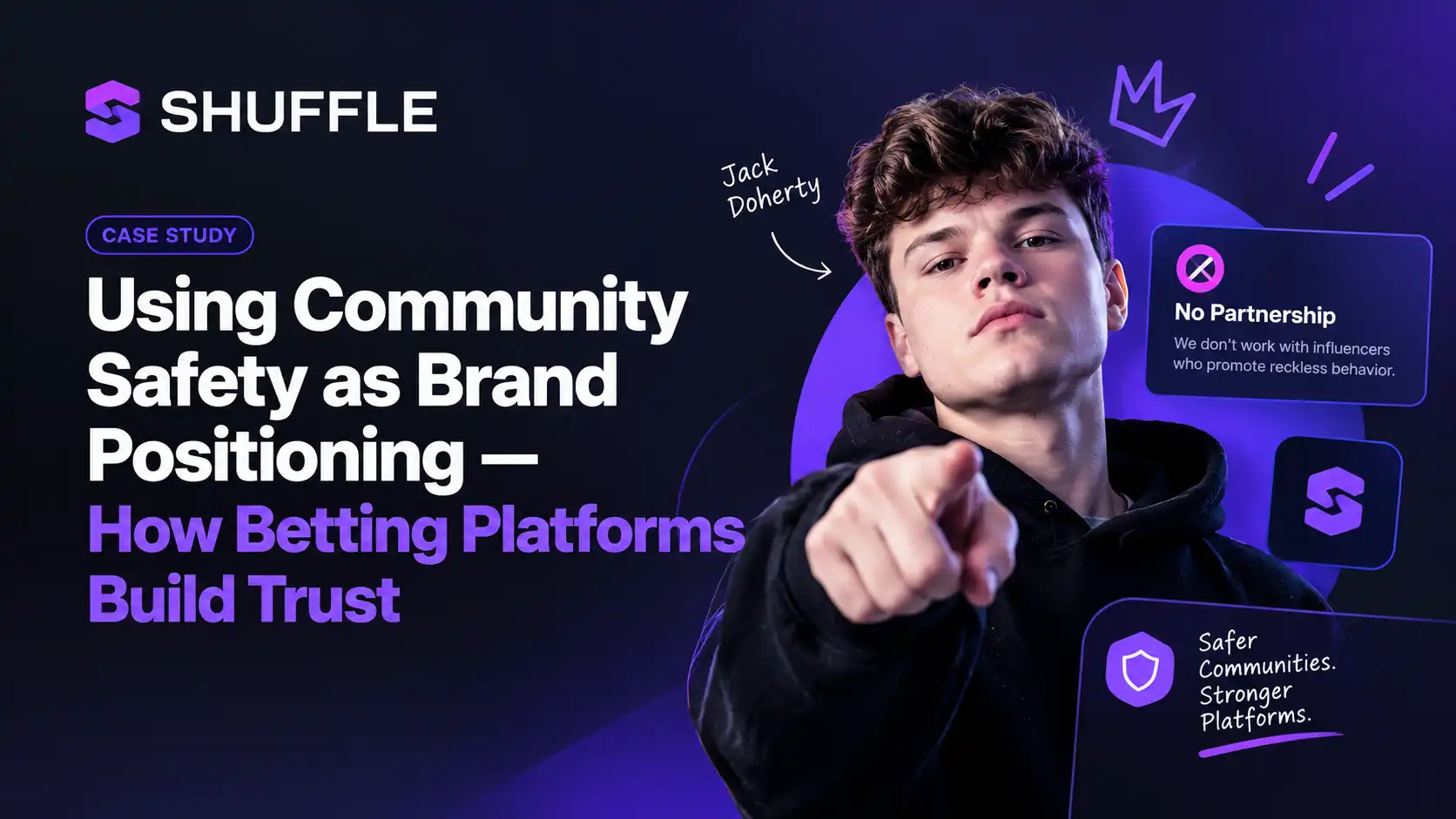
Shuffle.com, a crypto casino, took the second route and made it very public. In late September 2026, when Jack Doherty—a creator with massive reach but a reputation for extreme content and questionable judgment—went looking for brand deals, Shuffle’s official account offered to pay him to stop posting. On 9 October, Doherty said he had signed a contract that bars him from posting online for six months. Shuffle CEO Noah Dummett confirmed the deal on X and called it “money well spent.”
By publicly paying to keep a controversial creator off the internet, Shuffle communicated one thing clearly: We’re not desperate for reach. We have standards.
Sources: IBTimes UK and SoMuchPoker, October 2026.
Why this works as marketing
- Differentiates in a crowded space. Every betting platform offers similar odds and games. Community safety positioning is rare. It stands out.
- Builds authority with responsible users. Parents, regulators, and cautious bettors notice. “We don’t partner with reckless streamers” signals maturity.
- Creates earned media. When a platform enforces standards publicly, it generates discussion. Free PR for taking a principled stance beats paid ads for “fun betting.”
- Regulatory advantage. Gambling is heavily regulated. Platforms that demonstrate responsible practices get regulatory goodwill. This translates to easier licensing and fewer compliance headaches.
- Attracts quality affiliates. Other creators see the platform enforces standards. Quality partnerships follow from quality positioning.
What makes this work
The strategy only works if it’s genuine and consistent:
- You can’t preach safety while quietly partnering with problematic creators elsewhere
- You can’t cherry-pick: if you ban one reckless streamer, you need a framework for others
- You need to back it up: responsible gambling resources, addiction support, transparent odds—not just virtue signaling
The broader lesson
This isn’t unique to gambling. Any platform operating in regulated or sensitive spaces can use this approach:
- Finance apps that refuse partnerships with crypto-pump influencers
- Health platforms that don’t work with supplement hype creators
- Education platforms that distance from misinformation spreaders
The takeaway
Community safety isn’t a constraint. It’s a positioning opportunity.
Platforms that embrace it don’t just avoid liability—they build brand loyalty with users who actually want to trust them.
Written by
Mashfiquar Rahman
GTM and growth consultant for SaaS teams, remote from Dhaka. I write one post a month from client work, usually with the numbers.
Want positioning that builds trust?
Tell me about your market and the trust gap you’re up against. I’ll tell you where I’d start.